Published Writing
One of the most important skills we work on in the classroom is effective and powerful communication.
-
Learning how to make a persuasive historical argument in writing is one of the most challenging and important skills we spend time on. As our class reflected on what we had learned in building our museum of disability history (see here), we asked students to put their thoughts to paper. Five students asked if they might compose their essay as an op-ed. It was a distant fantasy that they might have their piece published in a newspaper like the New York Times. But after many ideation sessions, multiple drafts, a lots of feedback, they did just that.
The same story was true of two graduating seniors who took what they’d learned in our Supreme Court class and contributed to the national conversation about sentencing children under eighteen to life-without-parole. They wrote an article that they published in a law journal and it has now been cited in several other law journal articles.
Other students have taken essays from our classes, tirelessly worked with me to polish them, and submitted those essays for publication in the Concord Review.
And another group of students had become so proud of their legal writing that they asked if they might send their essays to Justice Elena Kagan and a highly regarded law professor. They did and both the justice and professor responded.
Students know that through their writing they can meaningfully contributed to a civic discourse that matters.
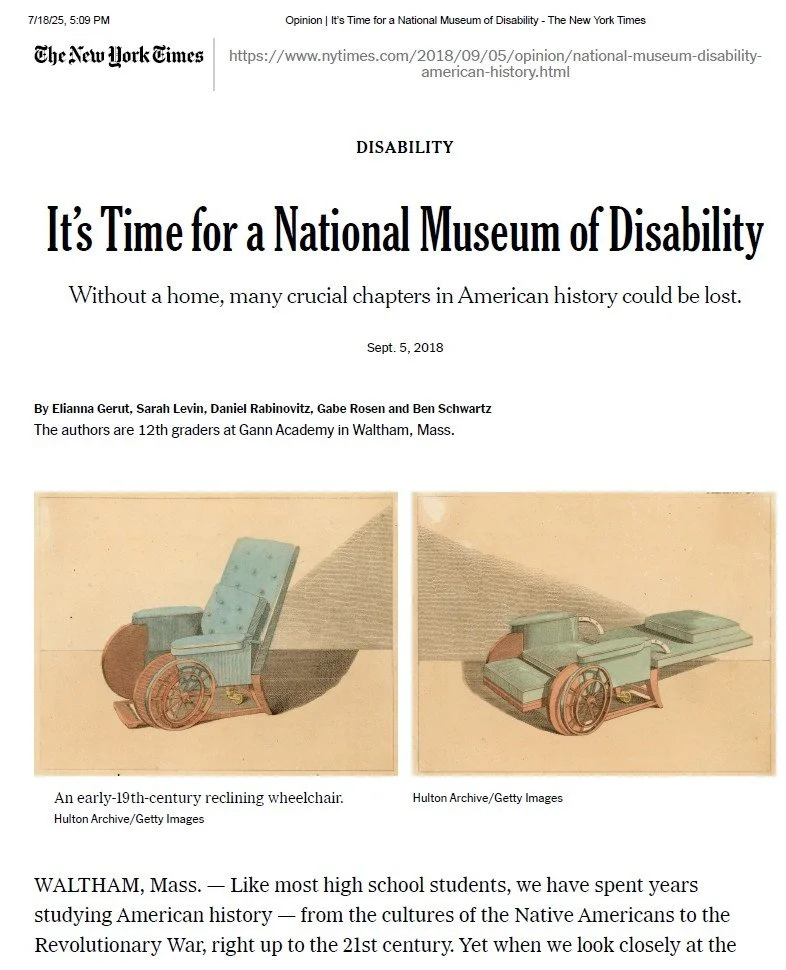
Inspired by their work on our disability history museum, five students wrote an op-ed calling for a national disability history museum. It was published in the New York Times. Click here or on the image above to read their op-ed.
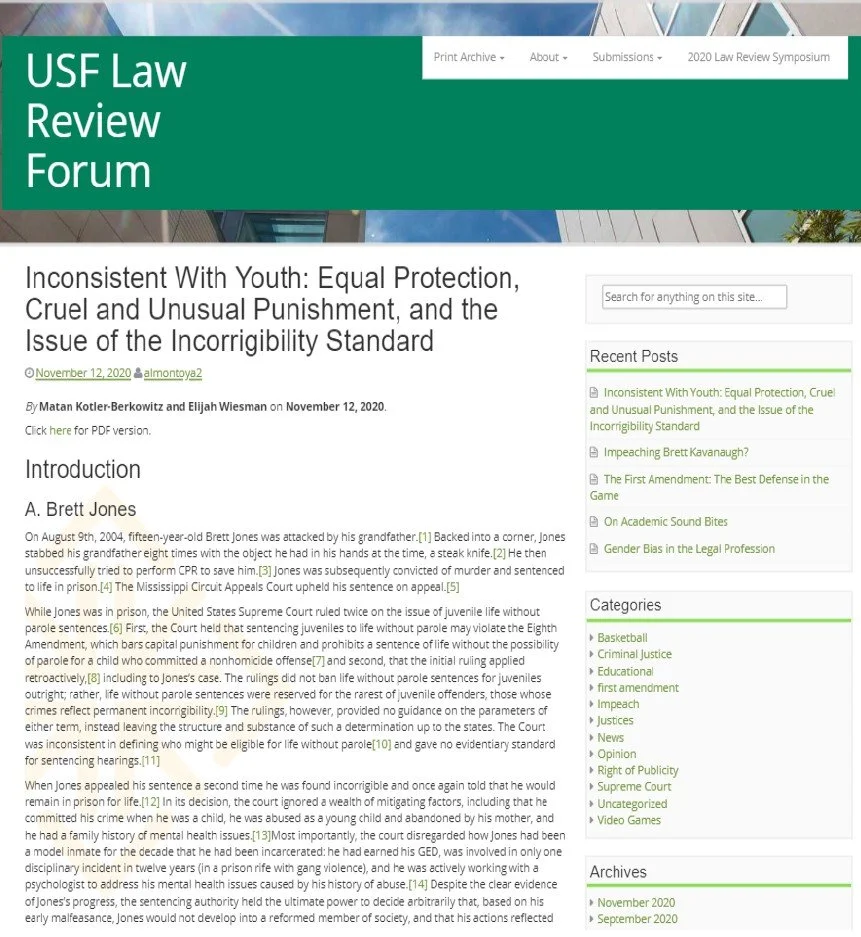
Two seniors wrote an article arguing for a change to sentencing guidelines for minors. It was published in the University of San Francisco Law Review. Click here or on the image above to read their essay.
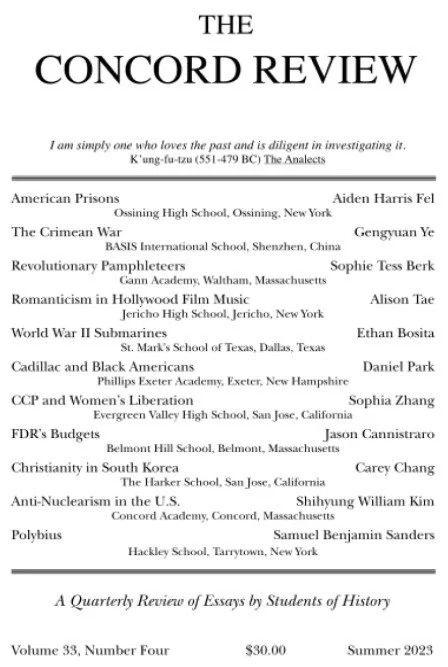
Inspired by conversations in our AP US History class, a student wrote an essay about Revolutionary War pamphleteers. Click on the image above to read her work, published in The Concord Review.
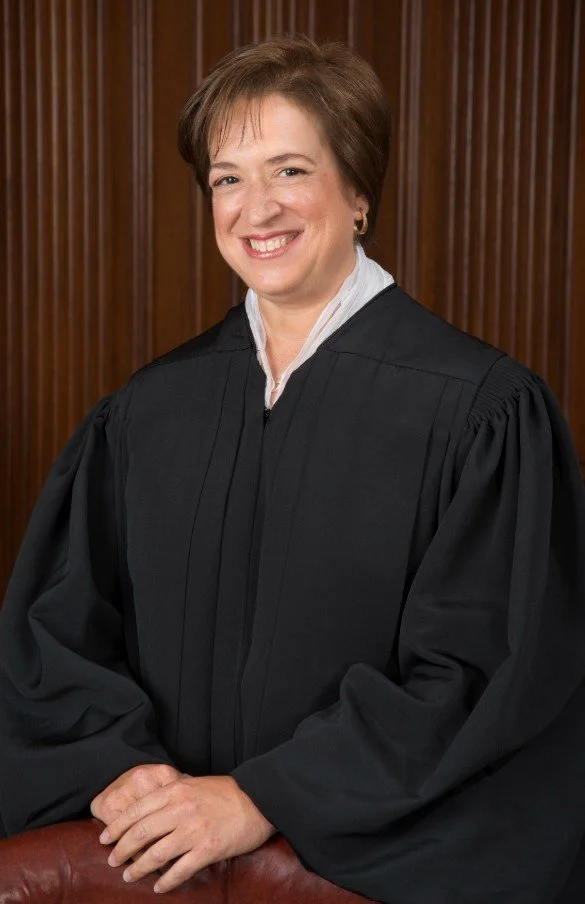
In our 12th Grade Elective on the US Supreme Court, students debate whether or not the Supreme Court ought to be upholding precedent even if the justice believes that precedent to have been wrongly decided. (This is called Stare Decisis.) We read a dissent by Justice Kagan and then a law journal article responding to that dissent by Professor Vikram Amar. Students suggested that we write letters to the justice and professor so we could weigh in on the conversation too. Students loved the idea and we have been writing letters ever since. Click the image (or here) to see some of the letters we have written (and at the bottom, a response from Justice Kagan).
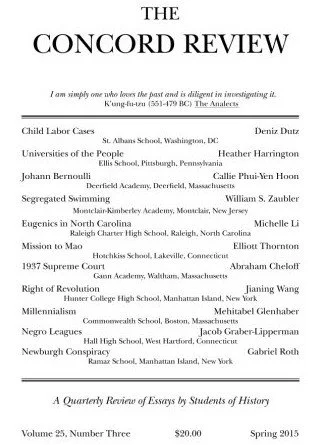
Inspired by our conversations about an important (and mysterious) moment in US Supreme Court history, a student wrote an essay on the topic. Click the image above to read his work, published in The Concord Review.

Click here or on the image above to see a sampling of letters we’ve written to Professor Amar. (See the description of the assignment to the left under the image of Justice Kagan.)