The Shoah: The World Must Know
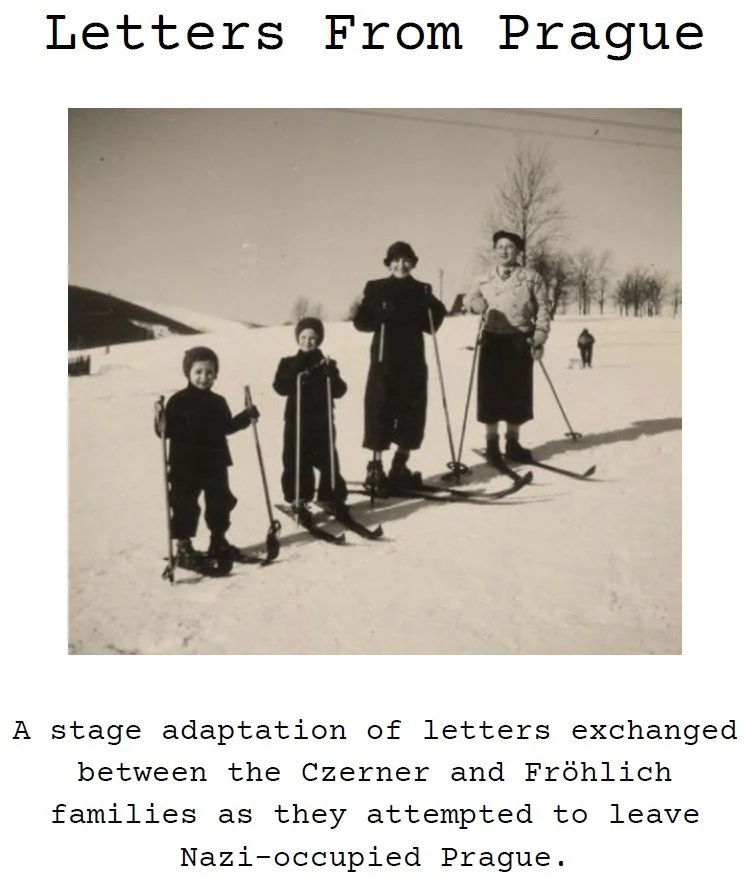
Students focused on the Holocaust through the genocide of the Jews of Prague. Reading family letters they learned about one family and its attempts to leave their occupied city and then helped produce a play that used those letters. Click on the image above to see some of the front-of-house exhibit panels the students created that helped contextualize the show.
-
In each of our Shoah courses, students focus on one aspect of the Holocaust and produce a public history project to share what they’ve learned with the world.
When my students read a set of 72 letters sent by Jews trapped in Nazi-occupied Prague, the students asked how might share this remarkable story with others. They helped produce a staged reading of the letters and built a supporting website and museum exhibit to contextualize the show.
In the next class, my students liked the idea of a play and supporting museum but wanted a different thematic focus. How can we help people better understand the “problem of evil” (why people do terrible things to each other)? They helped stage a play (and front-of-house exhibit) based on interviews between Treblinka commandant Franz Stangl and journalist Gitta Sereny.
The students after that focused on the medium of podcasting. Digging into the broader contexts of Nazi racial terror and genocide they evaluated to what degree the Holocaust happened in a vacuum. Students explored the global (and US) contexts of eugenics, race law, Manifest Destiny, and then shared their findings in a series of podcasts.
See below for their amazing work.
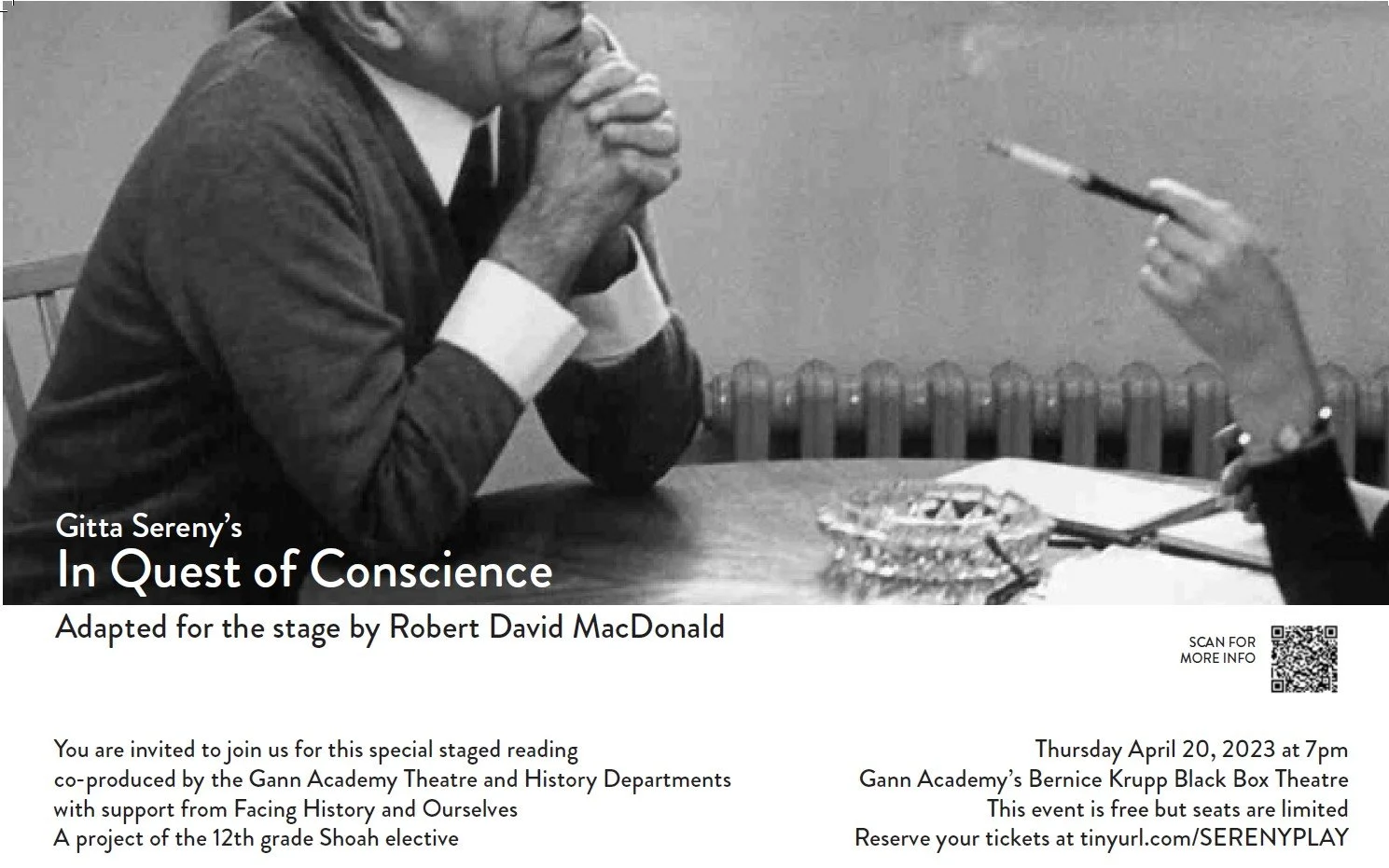
Students studied the Holocaust through the story of the Nazi death camp Treblinka and its commandant, Franz Stangl. They then produced a play based on interviews conducted between Stangl and a journalist, Gitta Sereny. Click on the image above to see the front-of-house exhibit produced by the students.
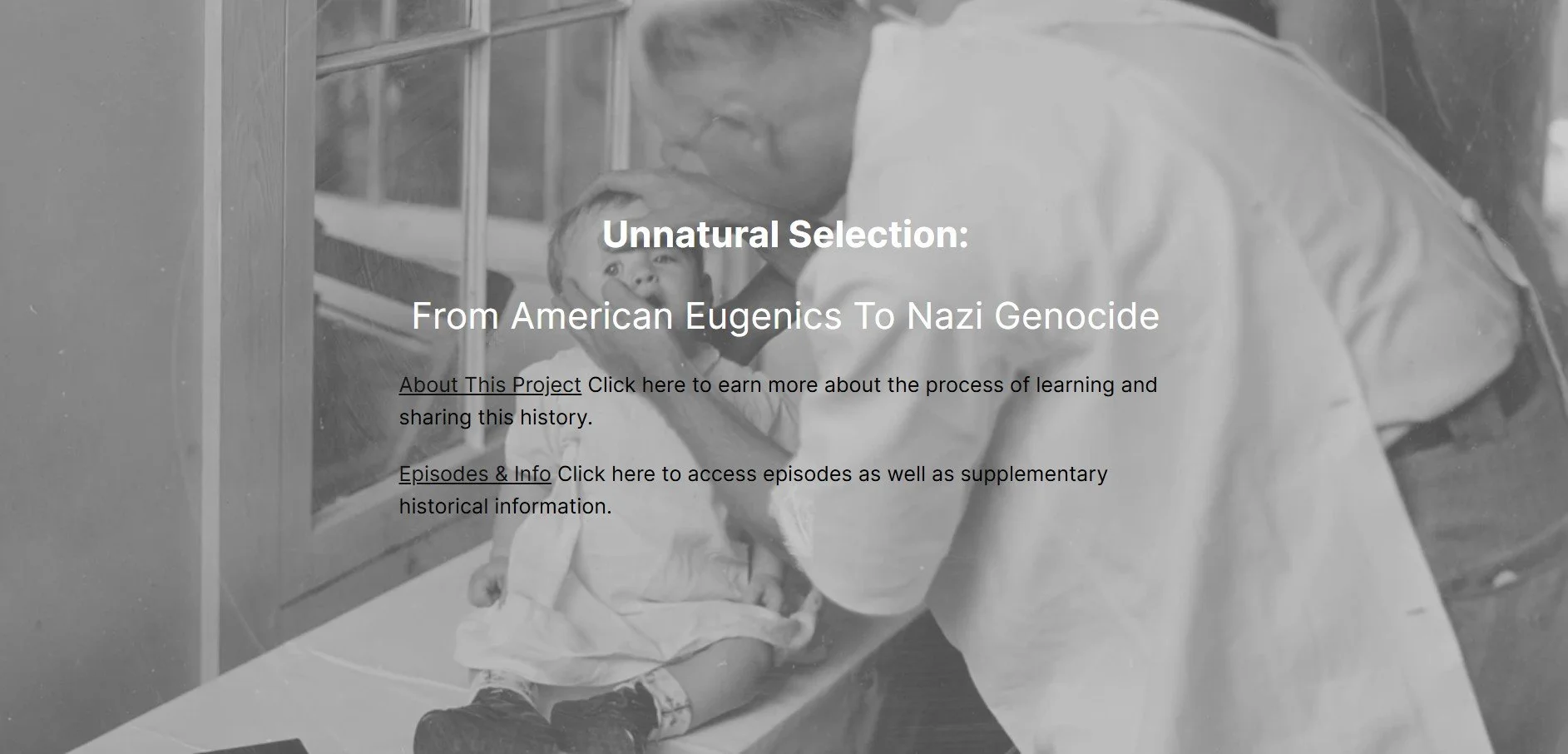
Students compared and contrasted American Jim Crow Laws, Eugenics, and Manifest Destiny and Nazi policies. They then created a podcast to share their findings. Click on the image above to find the podcast homepage.