Sacred Spaces
-
Who in our society have we marginalized? What is life like for people who live on the margins? And what ought we do with the institutions, hospitals, schools, prisons, and homes these marginalized people once occupied when they are no longer used by them? Is it our obligation to remember their stories by preserving the places they once lived in? My students and I spent a week exploring these questions.
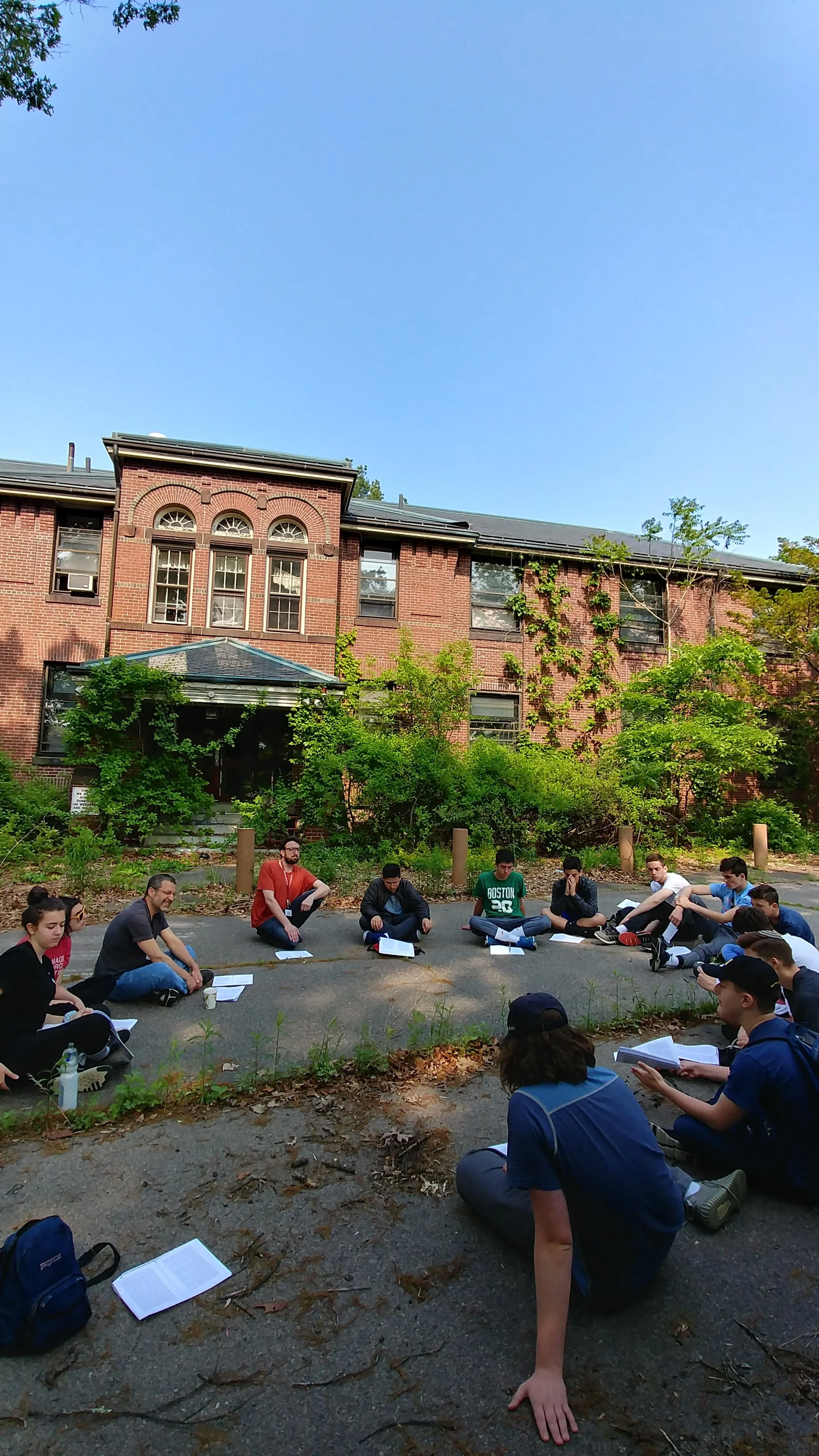
Students sit outside one of the decaying buildings of the Fernald School. We discussed whether or not the institution should be preserved, and if so, why and how. We compared and contrasted other sites we visited. Each had once been in a state of decay and is now preserved. What would we want for the Fernald School? What would we want to avoid? Click the image above to see the complete itinerary of the whole Sacred Space journey.
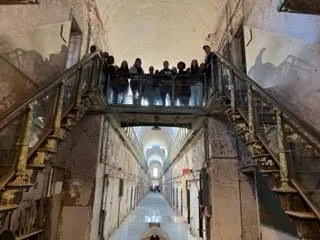
Inside the walls of the Eastern State Penitentiary. Students spent several hours in conversation with the curators of the museum, unpacking the choices the curators made. What kind of stories did they chose to tell? How did the museum make sense of incarceration in the 19th century? Today? Should the museum be used for ghost tours (even if they bring in a lot of money)? Click the image to see the coursepack and texts that we used the think through these questions and so many others throughout our Sacred Spaces journey.